
01 / GUIDE
WHERE IS SAN PEDRO DE ATACAMA?
San Pedro de Atacama lies in northern Chile, in the Antofagasta Region, at approximately 2,400 metres above sea level.
The town is surrounded by some of the Atacama Desert’s most distinctive landscapes and makes a natural base for exploring the high plateau and the Andes.
From here, you can reach salt flats, lagoons, geysers, hot springs, volcanoes, canyons and ancient Andean settlements.
02 / GUIDE
HOW MANY DAYS DO I NEED TO EXPERIENCE ATACAMA?
For a first visit, we recommend allowing at least four or five full days.
That gives you time to combine different kinds of experiences without taking excursions on consecutive days, while leaving room to acclimatise and enjoy the town.
A longer stay makes space for longer journeys, trekking, astronomy, food experiences or private routes designed around your interests.
03 / GUIDE
WHAT CAN I DO IN SAN PEDRO DE ATACAMA?
There is a wide range of possibilities, depending on the kind of journey you have in mind.
DESERT LANDSCAPES
Moon Valley, Vallecito and Mars Valley reveal some of the distinctive geological formations around San Pedro.
SALT FLATS AND LAGOONS
Cejar Lagoon, Ojos del Salar, Tebenquiche, Baltinache Lagoons and the high-altitude lagoons reveal the desert’s varied landscapes and ecosystems.
HIGH ALTITUDE AND THE ANDES
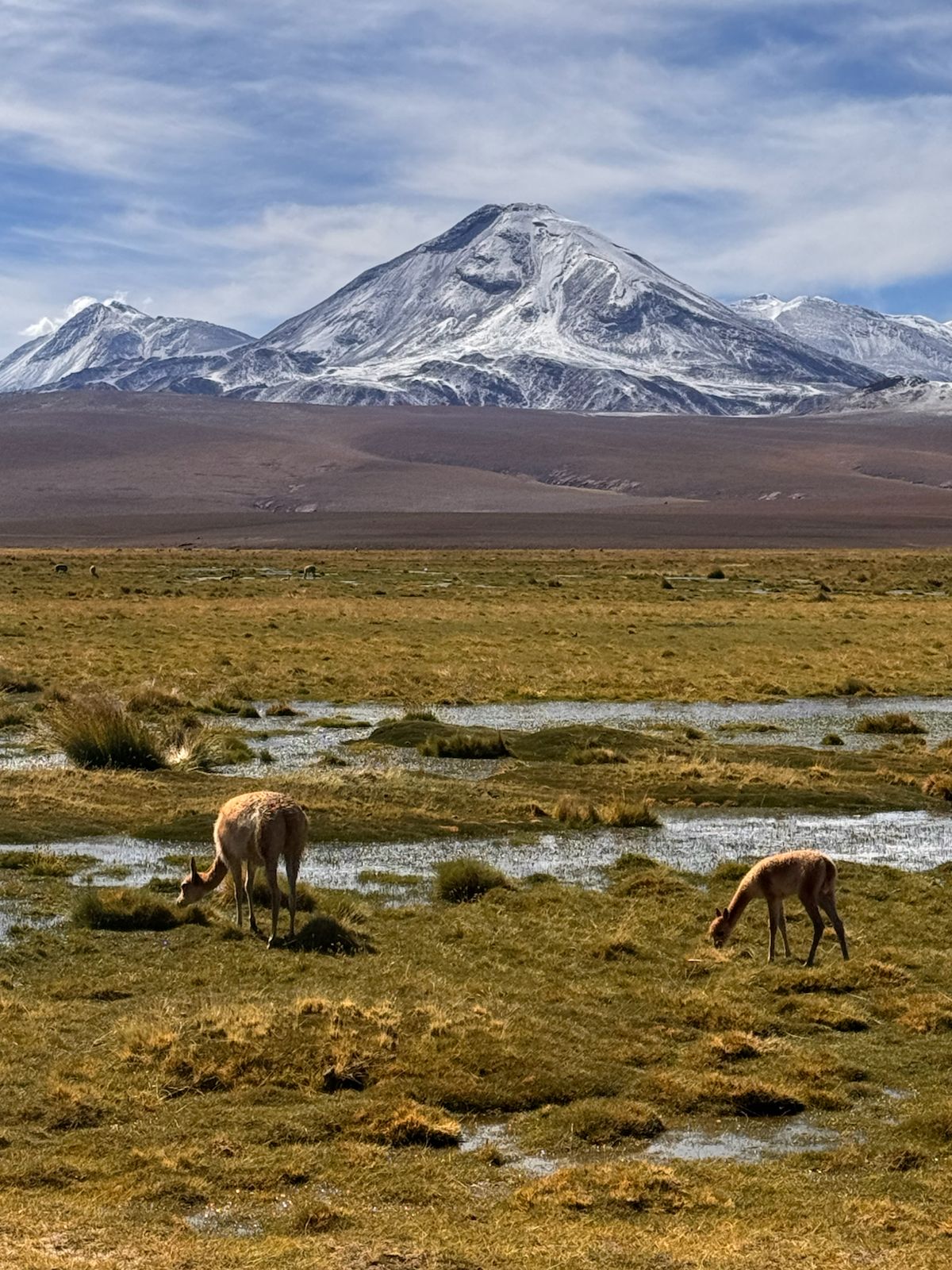
A journey onto the high plateau reveals elevated landscapes, volcanoes, wetlands, salt flats and mountain-ringed lagoons.
GEYSERS AND HOT SPRINGS
The El Tatio Geysers are among the area’s most remarkable geothermal landscapes, while Puritama Hot Springs combine nature, walking and warm mineral water.
CULTURE AND HERITAGE
Places such as Tulor Village and Pukará de Quitor offer a connection to the history and heritage of the peoples who have inhabited this land.
ASTRONOMY
Low light pollution and the desert’s atmospheric conditions make San Pedro a remarkable place to observe the night sky.
04 / GUIDE
SHOULD I PREPARE FOR THE ALTITUDE?
Yes.
Experiences take place at different elevations. Some excursions climb well above 4,000 metres, so it is important to plan your itinerary with gradual acclimatisation in mind.
During your first days, it can be helpful to begin with lower-altitude experiences and save the higher journeys for later.
Stay hydrated, rest well and pay attention to how your body is responding.
05 / GUIDE
WHAT SHOULD I BRING?
Your needs will vary by excursion, but a few things are essential:
Temperatures can change considerably between day and night, especially on high-altitude excursions.
- Layers of clothing
- Comfortable footwear
- Sun protection
- Sunglasses
- A cap or hat
- Water
- Warm clothing
- Swimwear for water experiences
- A camera
06 / GUIDE
WHEN IS THE BEST TIME TO VISIT SAN PEDRO?
San Pedro de Atacama can be visited throughout the year.
Each season brings different temperatures, scenery and visitor activity, so the best time depends on the experience you are looking for.
If astronomy is a priority, for example, sky conditions and the phase of the moon may matter more than the season.
07 / GUIDE
ONE LAST RECOMMENDATION
Do not try to see all of Atacama in a single day.
The desert is always changing: light, altitude, temperatures and landscapes make every route different.
Rather than collecting excursions, leave room to enjoy each place and combine different kinds of experiences during your stay.
Atacama is best discovered when you have time to take it in.